Swimming at the deep end of an adverbial phrase and the challenges of learning something new

When was the last time you learned something new? Jumped in at the deep end, went in completely blind, arms open, eyes wide, to learn something you had no earlier knowledge or skills in?

I’m doing a new ba now, and I’m struggling. Not to the point of wanting to stop or give up, just to the point where I have to work harder than I have in years. It feels like I’m back in school, learning definitions by heart and practicing phrases and rules again.

This got me thinking about how I haven’t actually learned something completely new in a very long time. My last BA was definitely challenging, and I certainly got to develop new sides of myself and my “craft”. However, those sides were to some extent already there; they just needed honing, practice, to be cared for, seen and worked on. Now I’m studying grammar and politics and intercultural communication. Every day I’m learning new phrases, new words, new concepts and ideas that I’ve never heard of before. That is exciting! It’s difficult and frustrating but also so so interesting.

As kids we learned something new everyday. Even better, when we were kids, we were great at learning. We hadn’t yet gotten into the arms race that are having better marks than everyone else, we had no concept of always needing to be the best, there was so much less fear of failure. A scraped knee from learning to ride a bike only hurt until mum put a plaster on it and kissed it better. A glossary test gone wrong only meant going back over the words and nailing it next time. But as we grow older a lot of us lose the ability to look at learning as a process, we want to be the best at everything the first time we ever try. There is this notion of being a natural, we want to be great without needing practice, because practice is difficult and more so, practice makes you look bad, like you don’t know. This is of course not right at all. Practice doesn’t make you look stupid, it makes you look determined. And no one can know anything, unless they’re taught. If we were only ever supposed to do what we learnt as kids, so we never had to practice and “look stupid” as adults, we’d have a very small array of skills and experiences to pick from in our lives, and that, in turn, wouldn’t make us very well-rounded and happy people, would it.

books-690219_1920.jpg

Yesterday I spent five hours at my dining table, pencil in hand and notebook in front of me, trying to make sense of in-depth sentence structure again. Subjects, adverbial phrases, demonstrative determiners, I know I’ve got it somewhere in my brain. I know a teacher from maybe eight or so years ago managed to lock it somewhere safe in my head, but it takes so much coaxing to get it out, to get those words back down on paper. Some of what I read was also completely new to me, linguistics on university level isn’t something I’ve got a lot of experience with. It took time, a lot of reciting out loud to myself, and a lot of tea.

But the feeling when I got it right! When I could highlight my answers, recite the rule and reason, and tell myself that I properly understood it; that was such a good feeling.

It’s a feeling I haven’t felt in years before this BA, but that I’ve been experiencing a lot these past couple of weeks. The feeling of being able to swim when you jump in the deep end, of keeping your balance when you go in blind, of seeing all the wonderful things the world throws at your open arms if you only widen them a little bit.
(Yes, I know I’m only talking about grammar right now, but the feeling still applies, haha)

I hope you learn something cool today!

-Andrea

Journal #9

I’ve always been a big fan of planning. I get my bus tickets in advance and show up at the airport three hours early. Making sure you’ve planned your journey well ensures that you won’t get stuck on any small, nameless bus stations, and it helps you be prepared for whatever you’ll encounter on the way. Plans also provide you with a great opportunity and a reason to be excited! Looking forward to something is half the fun of it, and intricate planning means you can prolong the joy for however long it takes you to plan.

Before I started uni in Winchester I wanted to be at the metaphorical airport which was my higher education, early. I started planning my degree abroad two years prior to my first year, and spent all of August 2013 to September 2015 looking up Winchester online and in travel books. I read about the uni and the course and my future lecturers, and I got books I knew people had used on the course in earlier years. I also got in contact with a couple of current students at the uni, who were oh so kind and guided me through my chaotic worries and confused thoughts. They answered all my questions, anything from ATMs to walking distance-grocery stores. All information I could gather was neatly penned into a small blue notebook with pink sprayed edges; my “Winchester Departure Bible”.

Come September 2015, I was prepared for departure. I had written packing lists for months, I knew exactly what flat I was moving into and who were moving in with me, I had prepaid tickets for multiple events all throughout freshers week. The airport found me early, a little scared, a little stressed, but mostly so excited and very well-prepared. At least, as prepared as you can be to move to a different country.

Fast forward to 26th of July 2018. I survived the Winchester adventure, and now I’ve got a Creative Writing BA(Hons) in my pocket. Winchester was scary, challenging, wonderful and confusing, and an experience I’ll take with me forever. In 17 days, however, I’ll be in a new city, in a temporary flat, nervous and jittery for my first day of a new BA. A new three years of studies, new people, a new uni. And I’m so excited. I applied for this BA in February, but after a lot of thinking, decided to not go for it if I got accepted. Instead I made plans for temporary solutions, job applications, volunteer work, making money, saving money. However, when the results came through I couldn’t get the feeling of needing to at least give it a try out of my head.

This might be my opportunity to rid myself of this extreme planner inside of me; maybe this is the time I learn that every change that happens in my life can’t be planned three years in advance, that I can show up at the airport with only two hours to spare. And if I can’t get rid of the planner, maybe I can make her take a little break for time to time. I’m starting a BA called Translation and Intercultural Comunications and a lot of the modules are subjects I’ve never tried my hands on before; I’m going in more or less blind. I feel unprepared, but so ready. I’ll get lost on the first day, I might get the wrong books or hold the map the wrong way around. But there’s nothing I can do that can’t be fixed, I’ve just got to jump in the deep end and see what happens this time. I’m nervous, but it’s a good nervous that’ll lead to loads of change, growth and personal development. Hopefully.

17 days until there’s new ground under my feet.

Bring on three new years. Bring on not being as prepared as I’m used to. Bring on a new adventure. I think I might be ready.

-Andrea

The Winchester Bucket List

Are you going to uni next year, and wondering how life will be as a student? Are you worried about working part time alongside your studies? Even better, are you going to uni in Winchester, UK, and are curious about new places to go, small nooks to discover and explore? For questions like these, the University of Winchester has created a student life magazine that focuses on simply living life as a student, no matter what course or degree you’re on.

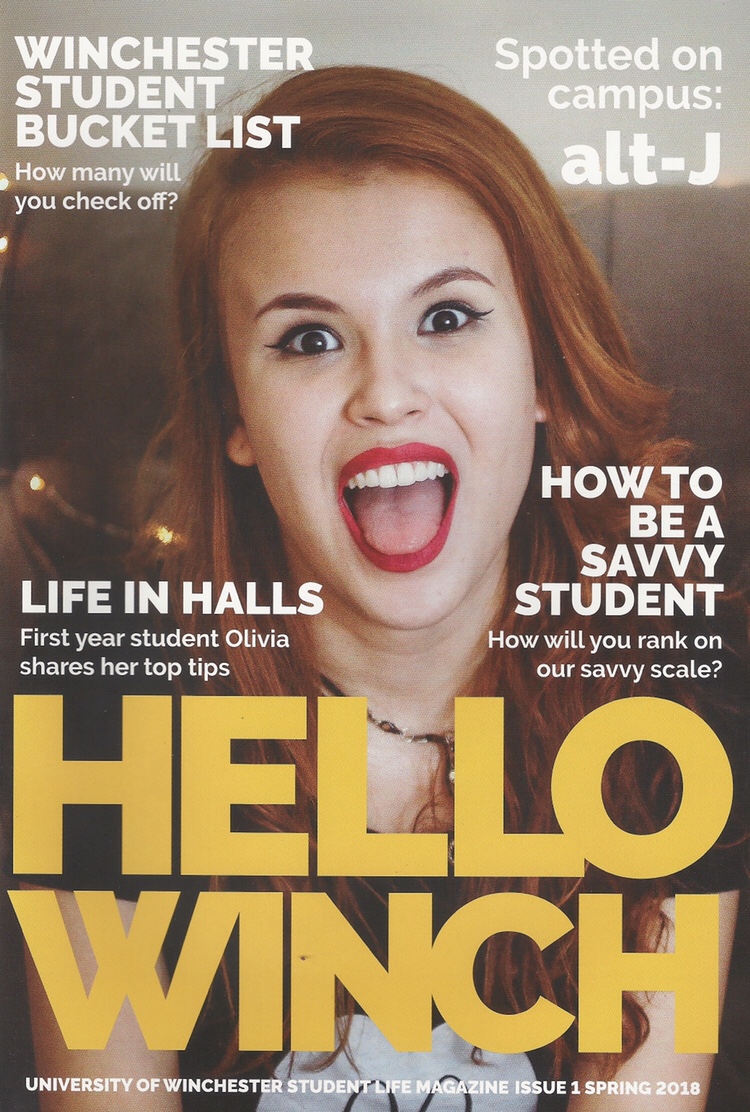
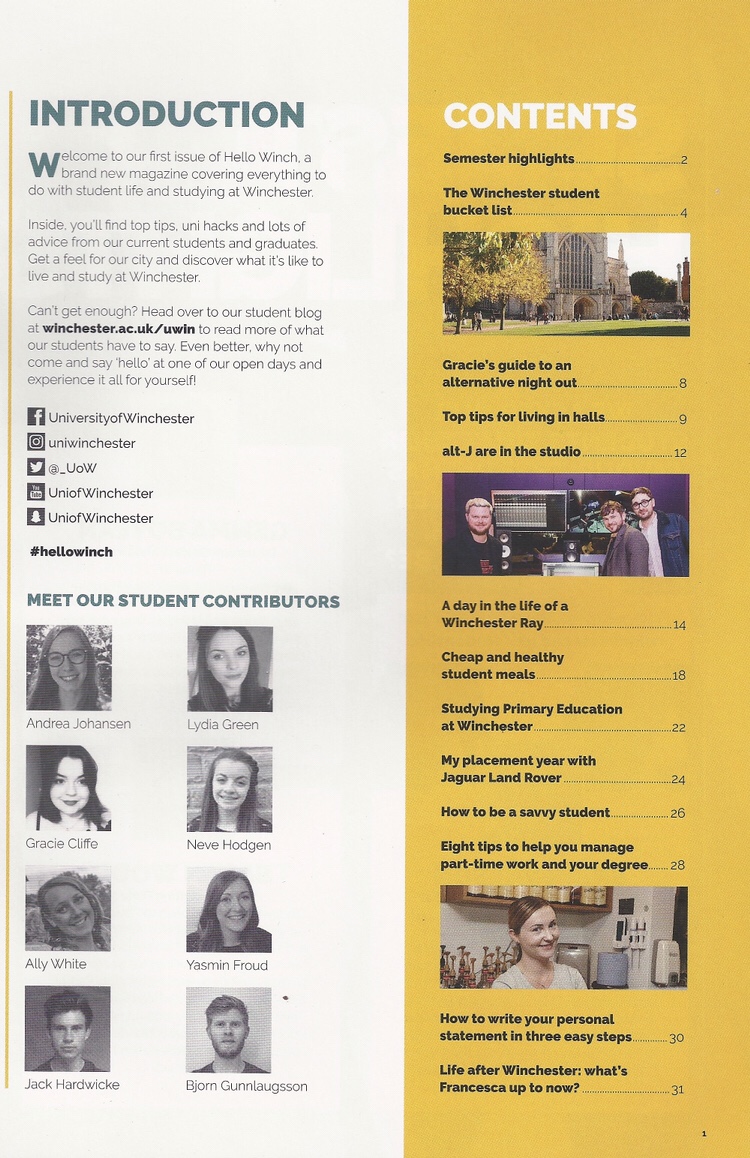
Remember I told you about this article I was writing a while ago? The magazine it’s in has been available at the uni for a couple of months, and it’s been handed out to students at the open days for a while, but now I’ve finally got my hands on a copy of my own, and can show you guys!

My article is called “The Winchester Bucket List”, is featured on the front page, and I’m listed on the contents page as a “student contributor”, which I’m really happy and a little bit proud about!
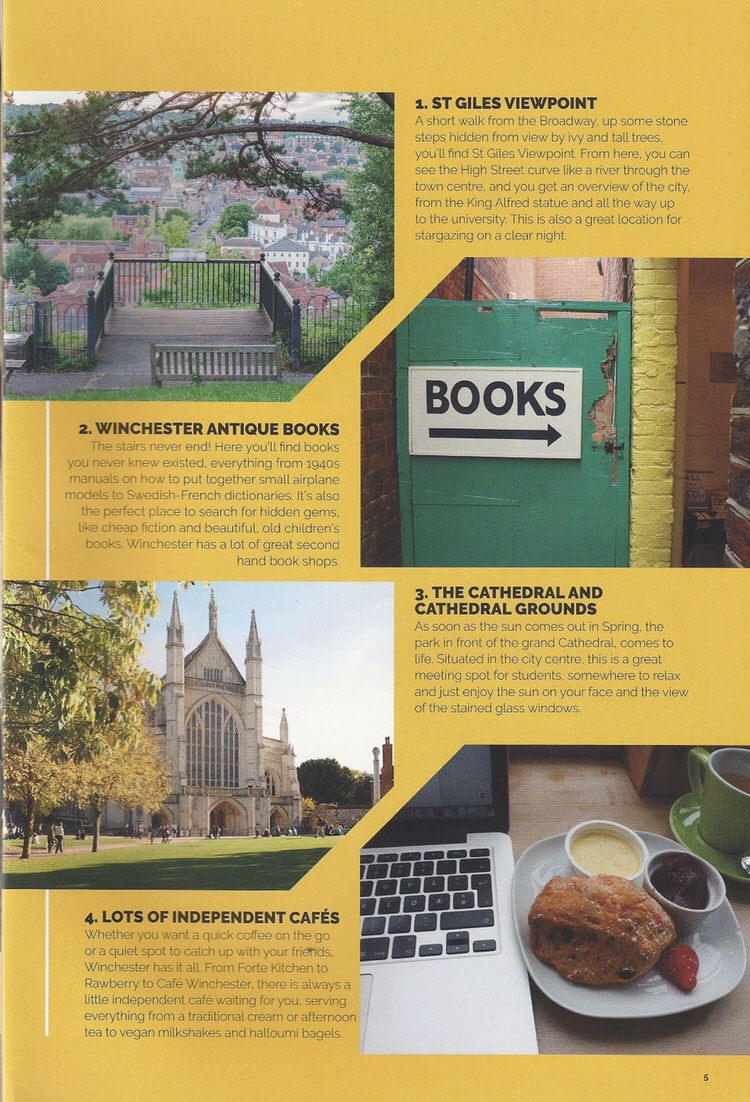
Talking about the article; this one was a lot of fun to write for a lot of reasons:
Firstly, I was contacted and asked to write something for this! After emailing back and forth with the management and content team, we figured out that a “tour” of Winchester would be a fun thing to put in there.
Secondly, I got to pick out my favourite places in Winchester and write about them, and now I’ve basically got the perfect memento of the town I’ve loved living and studying in.
Thirdly, for the first time ever I did both the article and the pictures! The photos in this piece are all by me (except for the St Catherine’s one), and taking “proper” pictures that would look good in an article like this was an interesting challenge I’d never taken on before.

I sent this piece off with pride when I was done with it. Then I was told that it would be given three full pages, something I was not expecting but really, really appreciated! And, drumroll please, here is the finished piece:

Look how cool it looks!! I had no idea how the design would look, but I’m really proud of how it turned out. The whole magazine is available for free at the University of Winchester, and it’s filled with tips and tricks on how to survive life as a student, created and written by current students and recent graduates.

Question of the day: am I the only one who finds it really difficult to take pictures of grassy hills (i.e St Catherine’s hill)? Everything just turned out very green for me… Also, does anyone know how to put separate pictures together into a pdf file? Help and suggestions are very welcome!

Hope you have a wonderful day!
-Andrea

Journal #8

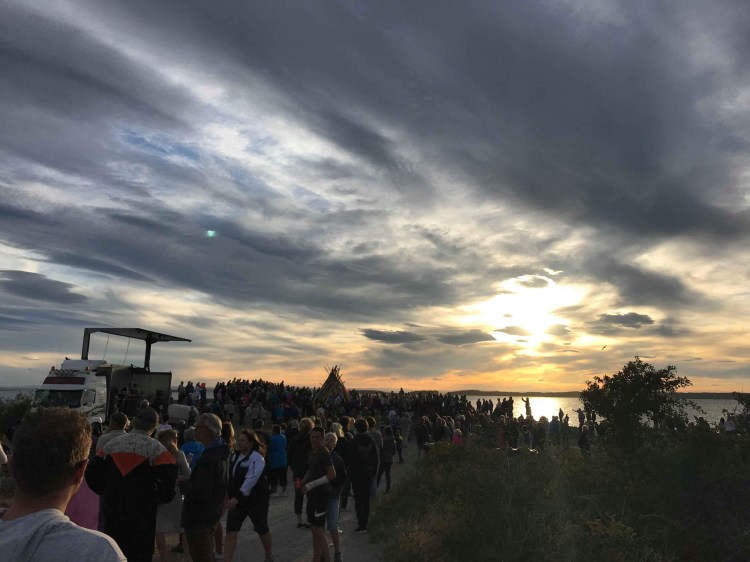
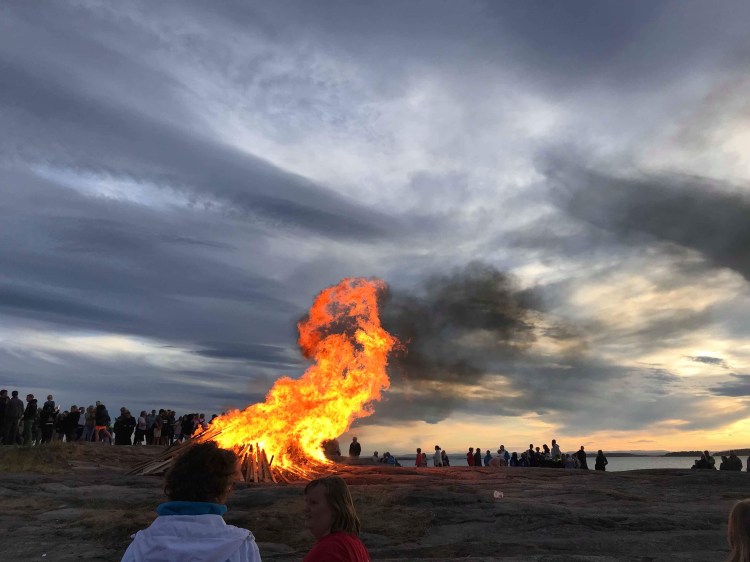
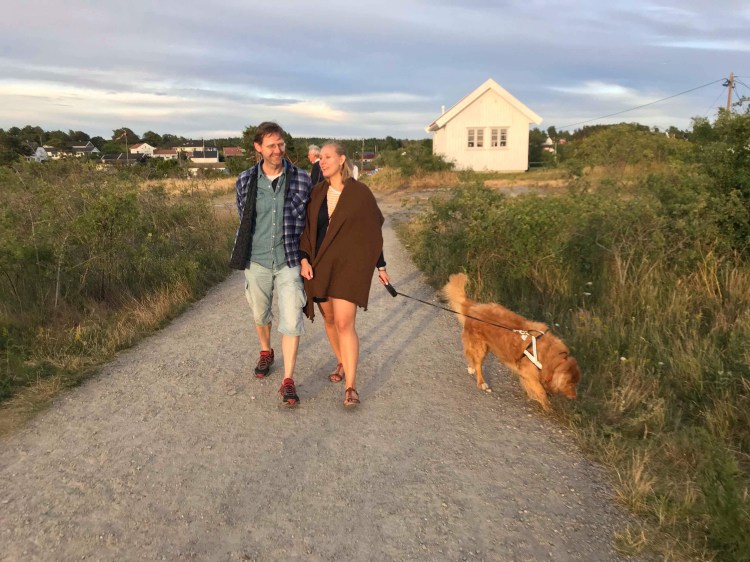
Shakespeare wrote about a Midsummer night’s dream, and on June 23rd (in Norway, at least) we celebrate midsummer night’s eve. Not the longest day of the year as I’ve always believed, but one day past the sun turning; when the night is one minute longer than it was the day before. We celebrated yesterday the same way we’ve always done, and I spent the day pondering how traditions stay the same, how we appreciate the things we’ve always done; my own midsummer night’s dream.

I dream of what I’ve always seen on an evening like this, of bonfires and burnt popcorn, of dogs off their leads and children learning to swim. I dream of grey haired locals playing saxophone from the back of a truck and gulls swooping down to peck at waffle crumbs left on the ground. I dream of shoes put away to dip our feet in the water and the taste in your mouth of knowing that you have all of summer in front of you, endless possibilities for tan lines and sun burns and morning teas on the veranda. I dream of post cards sent and letters received, breakfasts with the ones I love and skype calls with the ones I miss. My midsummer night’s dream is of those nights that never end; when you bring blankets and lanterns and candle light out into the garden, to watch sun sets and sun rise, when you watch the bats soar and smell the jasmine flowers, when life is floating and there is nowhere you need to be.

Midsummer’s night is a night when you remind yourself of how strong nature’s forces are, that we’re all part of nature, and in later years, that we can’t control it no matter how hard we try. On midsummer night’s eve we gather our families and celebrate that we’re out of the cold winter months and that we’ve got all of summer ahead of us. We sing songs passed down to remember that those we have lost are always with us, in the wind and the trees and the stars.
It’s a day where you pick wildflowers and put them under your pillow and where you’re grateful for what you have, what you’ve lost and what you’ve yet to gain.

We are a family of four, and my favourite time of all, is all of us together around the table outside. Yesterday, we sat there for the better part of three hours. There was tea, there were blankets being shared, words floating through the air. There is nothing you can’t talk about when it’s past midnight and it’s warm enough to never go to bed.
My midsummer night’s dream is a wish for many more eternal light like this one.

-Andrea

WWW Wednesday June 20

Thank you so much to everyone for how kind you were about the Bookshelf scavenger hunt! I’m so grateful that so many of you took the time to read it, and hopefully, it made you want to read some of the books!

On the topic of books, though; Welcome to this week’s WWW Wednesday!

img_0014

WWW Wednesday is hosted by Taking On A World Of Words , and anyone can join. All you need to do is answer three simple questions:

What are you currently reading?
What did you recently finish reading?
What do you think you’ll read next?

I’m currently reading
Strange the dreamer by Laini Taylor


I can’t tell you how excited I was to get my hands on this book! Just the concept of a dream choosing its dreamer seems so fascinating to me, and it’s something I feel like I need to learn more about. I also read The daughter of Smoke and Bone years ago, and really like Taylor’s writing style. Only a 130 pages in or so but already hooked!

Blurb:
The dream chooses the dreamer, not the other way aroundand Lazlo Strange, war orphan and junior librarian, has always feared that his dream chose poorly. Since he was five years old he’s been obsessed with the mythic lost city of Weep, but it would take someone bolder than he to cross half the world in search of it. Then a stunning opportunity presents itself, in the person of a hero called the Godslayer and a band of legendary warriors, and he has to seize his chance or lose his dream forever.

I just finished
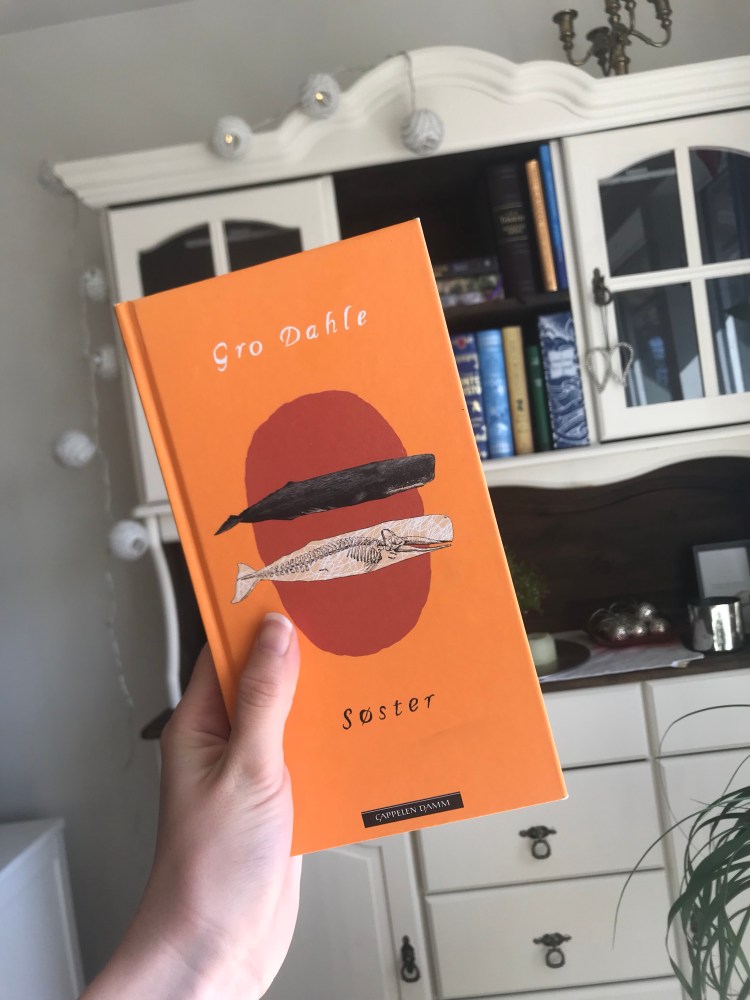
Søster by Gro Dahle

About a hundred pages of Norwegian poetry about really wanting a sister. Dedicated to the bond between sisters; related sisters, book sisters, brothers who are sisters, or sisters who aren’t sisters at all. A rollercoaster of a book that I went from really enjoying to properly disliking as it turned angrier in the middle, to being in complete awe of the beautiful simplicity Dahle masterfully handles towards the end.

Blurb
En som vet om meg
som bare en søster vet om meg.
En som er i rommet
slik bare en søster kan være i rommet.
Et søsterhode.
En søsterrygg.
En søstervegg
å lene meg mot.

(Translation)
Someone who knows me
like only a sister knows me.
Someone who’s in the room
like only a sister can be in the room.
A sister head
A sister back
A sister wall
to lean against.

Next book on the list
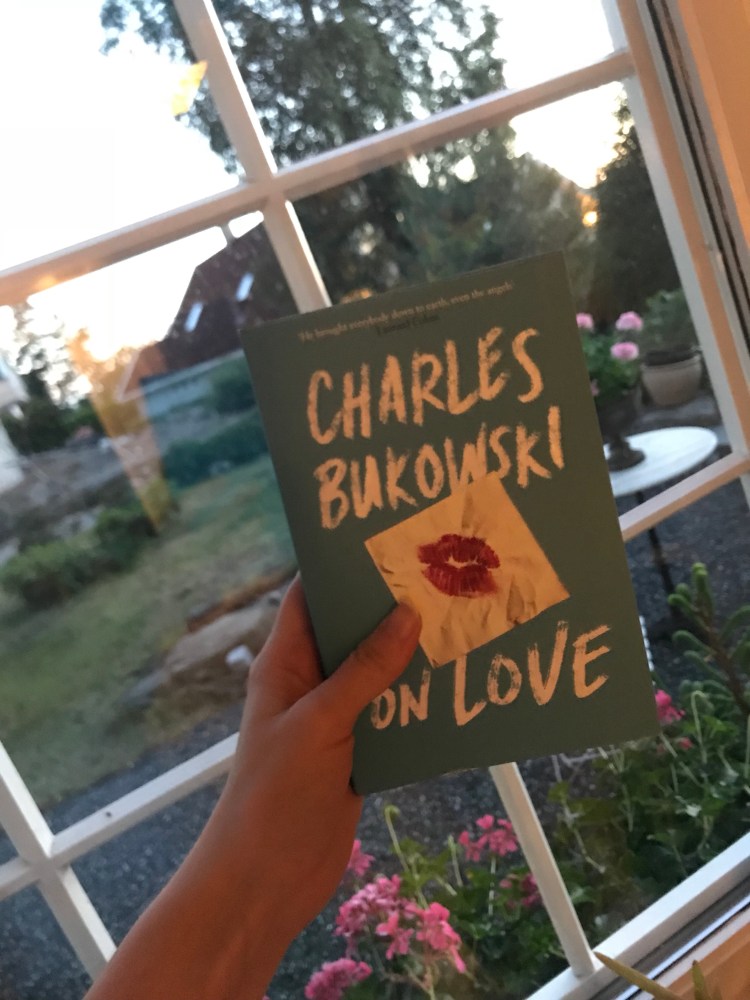
On Love by Charles Bukowski

More poetry! So many people say that Bukowski is a must-read if you like poetry, which (clearly) I do. I’ve never read any of his work before, and I’m excited to see what it is about his voice that draws so many people to his poetry. This book is also another one of those I bought at an airport somewhere once and said “I’ll need something to read on the plane” while at the same time lugging along 4 books in my backpack. I like to be prepared.

Blurb:
In Our Love, we see Charles Bukowski reckoning with the complications of love and desire. Alternating between the tough and the tender, the romantic and the gritty. Bukowski exposes the myriad of faces of love in the poems collected here – its selfishness and its narcissism, its randomness, its mystery and its misery, and ultimately, its true joyfulness, endurance and redemptive power

So that was another week gone, and another WWW Wednesday done.
Last week I got to read so many people’s WWW posts and it felt almost like a little community. I loved it! So please please please, if you’ve done a WWW either now or in the past, drop me a link in the comments and I’d love to read it!

As always, have a nice day x
-Andrea

Currently listening to:

https://open.spotify.com/embed/user/1152742552/playlist/2ePd46K3QMVYo9YqXuhJuu

Journal #7

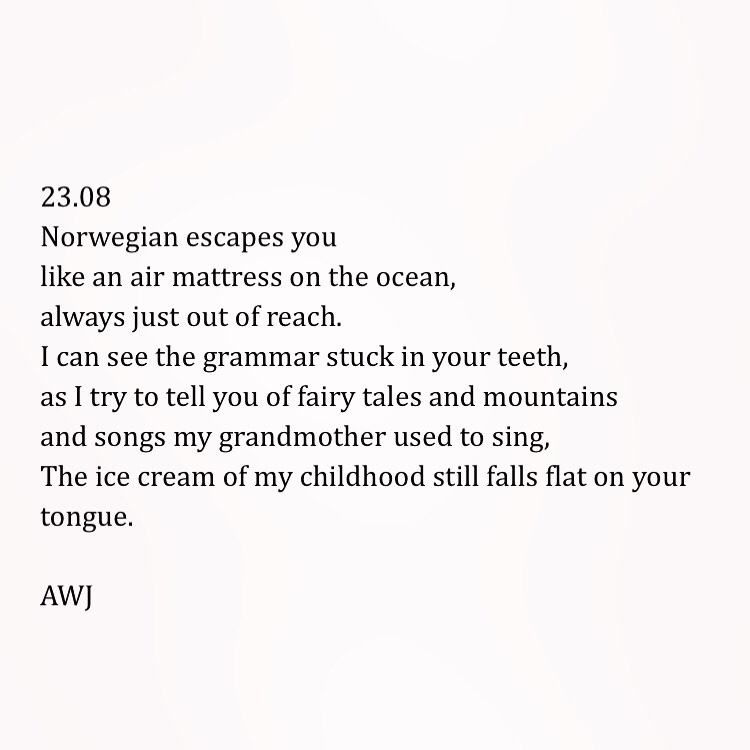
Norwegian translation below the picture x 

The house is quiet. I let my eyes follow specks of dust dancing lazily in the sun and I’ve got my hands around an elephant mug filled to the brim with blueberry tea. The steam swirling out of the mug paints roses in the air. I’ve never liked waking up early, but I’ve always loved being awake, morning’s early hours; the silence before anyone else wakes up. It’s just my book and me and the soft and distant whirr of the world outside. I think about the people I miss as I let my fingers play with the steam. As the steam looks like dragon’s breath, I think about all the people I haven’t met yet, and I think about the places I want to go, the things I want to write, as the steam slowly settles down. I also think about how many different “me”s there are, and that since I rarely get up this early, this “me” isn’t one I get to explore a lot. It’s like the rest of the world isn’t existing yet, in my little hour of the morning. Soon there will be breakfast and chatter and the people I care about, and I can’t wait. But right now it’s just me. I’m just here. It’s gonna be a good day.

IMG_0022.JPG

Det er stille i huset. Jeg lar øynene følge støvet som danser i late solstråler, mens jeg har hendene rundt en kopp breddfull av blåbær-te. Dampen leker, maler roser i lufta. Jeg har aldri likt å stå opp  tidlig, men det å være våken tidlig, det setter jeg pris på. Jeg elsker morgentimene, stillheten før noen andre våkner. Det er bare boka mi og jeg nå, og den myke, men fjerne, lyden av verden utafor. Jeg tenker på de jeg savner mens jeg lar fingrene spille igjennom dampen. Mens dampen snor seg som varm pust i kuldegrader, tenker jeg på alle de jeg ikke har møtt enda og jeg tenker på alle steder jeg vil se, alt jeg vil skrive, når dampen endelig legger seg. Jeg tenker også på alle de forskjellige “meg”ene som finnes, og siden jeg sjelden er oppe så tidlig som dette, er dette en “meg” jeg ikke opplever særlig ofte. Det er som om verden ikke er til ennå, i denne lille timen jeg sitter her. Snart blir det frokost og småsnakk og de jeg bryr meg mest om i hele verden, og jeg gleder meg. Men akkurat nå er det bare meg. Jeg er bare her. Dette blir en god dag.

-Andrea

How to Fit Your Word Count: Cutting Edition

One of the things I’ve enjoyed the most about doing a CW degree, is seeing my own and others’ attitude towards word counts change. In first year, a 1500 word essay seemed almost unmanageable but now 2500 words are never enough.

I’ve talked a lot about word counts on this blog lately, and here is my list for quickly cutting words to make sure your story can fit your set word count:

1. Are there any scenes you can remove?
Cut any scenes that don’t move the plot or develop your characters!
Of course, if you’re writing a book with a 100K words, you can afford to put in a page of pure location description, or have a couple of slow scenes that set the tone more than drive the plot. However, when you only have 2500 words to establish a plot, your backstory and characters, plus create an interesting story, scenes that don’t drive the plot are a luxury you can’t treat yourself to.

2. Can you shorten the beginnings of any scenes?
A bit like with poetry, it’s easy to make the beginning a bit wordy as you often think you need to explain concepts you don’t need to explain. Instead of wordy introductions to each scene, get right in on the action! This helps your pacing and gives you more words to play with for the exciting and intriguing parts.

3. Can you remove any characters?
Removing characters might mean removing whole stretches of dialogue or entire scenes, but if what’s conveyed in said dialogue or scene can be shown in a different scene, then this might drastically shorten your word count, making you able to put more story in there.

4. Give all your characters names!
This might seem like a stupid one, but one I figured out while writing my dissertation. As I was writing a piece of children’s fiction told from the perspective of a child, I decided to have the narrator call another character’s parents “Georgie’s mum” and “Georgie’s dad”, simply based on the fact that kids rarely think about parents having names at all. However, this meant that every time I mentioned these characters I had to spend two words on them, and by giving the parents their own one-word names, I was able to cut one word per mention, which actually turned out to be quite a few words in the end.

Note: I’m not saying to not do this ever, of course. It’s a fun way of talking about people in writing, but it’s important to think through whether it’s worth using up your word count for it.

5. Remove the “that”s!
Leave the “that”s where they’re grammatically correct, but don’t overuse them. This post/article actually explains it really well! Apparently the word “that” is so overused in writing, that four different lecturers felt the need to warn us about it in first year. I never remember to heed their advice while writing, but never forget it while editing either.

6. “Kill Your Darlings”
In writing situations, your “darlings” are scenes, ideas, sentences and description that you as the writer loves, but that might not do anything for the story. These darlings have often stayed with the piece from the first draft, and often end up fitting the story a little awkwardly, as they don’t change with the piece as it develops. This can lead to parts of your story reading a bit awkwardly, like you’re taking a break from the actual story to shoehorn in this beautiful, poetic sentence, that really doesn’t do much for the plot.
Getting rid of such “darlings” might be a team effort; you might need the help of someone who aren’t as attached to these phrases as yourself to clear them out.

Most of these tips are tailored to writing fiction, but some can also be transferred into non-fiction, copywriting and any type of writing, really. I hope this could be of some use to someone, if only as a reminder of something you already know!

Have a lovely day,
-Andrea

“I Think I’m Dreaming”, cutting two thousand words and wrapping up uni with a bang

“Compelling from start to finish, the writing really takes us into your imagined world of the future, which although futuristic, finds authenticity in current fears about surveillance, work-life balance and control.”

Remember this, the story that never ended? The creative piece I struggled so much with finishing that I started doubting everything I’ve ever done, all throughout my BA?
Yep. Got it back yesterday, and almost started crying when I saw that my lecturer liked it, and gave it a neat little 74. 74! On the piece I had to cut 2000 words off to make it fit in the word count! So happy!

font-705667_1920.jpg

Okay, let’s recap the last 15 hours of working on this piece, the hours that didn’t make it into the writer’s log, just because of the sheer despair and dread (dramatic, I know) I was feeling at the time.

On the 22nd of May, I sat down in the early hours of the morning and finished the draft of the creative piece. The reason I found it so difficult to actually write the piece, was because the idea was just too big for the given word count and I didn’t know what to focus on. So, I figured I’d just write everything I wanted, and then cut it down to the correct amount of words later.

Big mistake. 

The finished draft was well over 5000 words long, meaning that I had to cut another assignment’s equivalent of words out of it, to get down to my correct 2500 words.

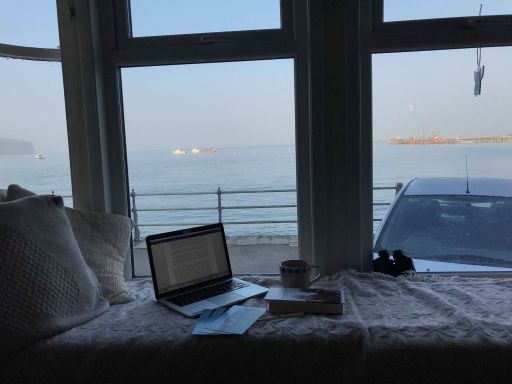
Andrea Wold Johansen Writing Nook Swanage

‘Lemme tell you, there were so many cups of tea involved in this, and the entire day was spent in pyjamas to stay somewhat comfortable. And I pulled out all of the tips from my Tricking Motivation series, to get through the day.

I printed out the full 5000-word draft multiple times, to work with pen on paper and physically strike big red lines through sentences and words that needed to go. To make my job easier I also made a little check list of things that normally clog my wordcounts, which will appear in it’s own post tomorrow. Was just thinking maybe this list could be helpful for others too!

However, I wasn’t alone on this last leg of the journey, I brought Harvey into this with me too; he edited, read and re-read, and really helped me cut out words and sometimes entire paragraphs. All credit to him and his patience for dealing with me. Finally, after a bit over 15 hours of work, the piece reached 2748 words, and knowing that I was finally within the correct word count was such a relief!

tea-381235_1920.jpg
I mean, I would’ve absolutely loved this process to look like this, but it most definitely did not.

Anyway, the reason why I’m telling you all this, is because I’m going to post the finished piece in a minute, I just wanted to let you know what happened after the writer’s logs, haha.

Like I said, it’s a sci-if-sequel, speculative piece set in England, a long time in the future. I’ve never really written neither sci-if nor speculative fiction before, but it was a lot of fun! And the essay that went along with this assignment (in which I debated whether or not the age of social media has made us incapable of forming and maintaining intimate relationships with others) got a 71, so I feel like I’ve really ended this degree with a bang, with two shiny As to leave with. Happy!

Thanks for reading and I hope you have a wonderful day!

-Andrea

“In the Soles of Their Shoes”

I know I’ve mentioned it before, but I’m still working on coming to terms with the fact that I’ve finished my BA. Part of this process, I’ve figured, is going back and looking at pieces I wrote in first and second year. Most writers hate looking back at earlier pieces, and I’m definitely no exception. All the sentences you’d cut, all the careless spelling mistakes, so much showing and not enough telling. However, it is interesting to see how far you’ve come, and it feels good to know that all the errors you find in your old work are things you know how to correct now; areas in which you’ve grown as a writer.

This short story (hidden under the Continue Reading bar) was one of the first short stories I ever wrote in a lecture, in a module called Creative Voice I. The task was to find an idea by looking at pictures, then head to the library to quickly research said idea and like this, come up with a story. I got a picture of Audrey Hepburn, the classic Breakfast at Tiffany’s shot, and started looking at her past and her life during the war; how she and some other girls put on secret ballet rehearsals and shows unbeknownst to the German soldiers. It got the ball rolling for a story about children helping out the resistance during the second world war, and resulted in a 700 word story. Also, today I’ve edited it slightly and submitted this story to The Master’s Review‘s Flash Fiction competition.

slipper-1919321_1920.jpg

On the topic of growing as a writer, though, if I were to write this story now I would show more of the surroundings to properly set the time and place more clearly, and also make the character’s intentions and feelings more clear. I would also work more with the characters, as the reader doesn’t really get a clear feeling about how old the girls are or why they’re doing what they’re doing. Also, the change in mood from the girls skipping down the street to one of them suddenly sneaking into the abandoned shop feels very sudden. Other than that, I do like it.

Click the Continue Reading Button to read the piece, or click here to see some of my other pieces!

-Andrea

“In the soles of their shoes”

Read More