Blue Psalms of All Hallows Eve

Today we celebrate All Hallows Eve, and for the first time I’m feeling the weight of it as more than just a holiday for other people to remember their loved ones.  This year I’m one of the one’s remembering, and that still hasn’t entirely registered, even after months have passed. Our days are so busy, our minutes too short, our steps too hurried, it’s so easy to wrangle that dark spot in your stomach into the back of your mind, to think grief is for another day. Except it rarely is, and it shouldn’t have to be.
Most days grief is for right now, most days grief has no interest in being pushed away, and on those days we should give grief a name.

I translated an All Hallow’s Eve Mass, for a service that was held today in the cathedral in the town I’m living in now. I don’t think of myself as Christian, but I’ve been working in some churches in my time, and I’ve been translating and live interpreting services in the cathedral for a little while now as work experience for my translation BA. This was a challenging one, though, just because the liturgy’s so heartfelt, the psalms so well-chosen and thus, the words just hit that little bit closer to home. It didn’t feel like work, more like hurting and healing.
The service was a beautiful one. Dignified, graceful and appreciative. It focused on relations between people, and what happens when we suddenly have to start talking about our loved ones in the past tense.
I must admit I’m still not entirely used to that part, yet.

For some, death may come expected, it may even be wanted, while for others it strikes abruptly and harshly, changing everything, taking people we cannot bear losing.
“Those who are loved will never be forgotten,” said the priest, a young woman who touched every heart in the congregation, who laid an arm of kind words around the shoulders of everyone in the church. You could see people needed to hear what she was telling them; that their emotions were valid, that grief takes many forms and that no one form is more correct than another.
Death is weird, it always has been and always will be, and we all react so differently when we encounter it.

This post is a bit jumbled, but I just wanted to share with you a paragraph from her sermon that I translated:

Those who are loved, will never be forgotten.
Many of us carry heavy burdens, we carry bereavement, loss and grief.
Today we think of those we love that are no longer with us.

We think of our community, of compassion and wonderful memories.
we are grateful for the days and the years we got to share,
for kind words, for warmth and for joy.

Many of us carry grief over everything that never came to be, 
for relations that were challenging,
for wounds that struggle to heal,
grief over what was taken too quickly,
over everything we never got to say.

We humans are so great at not saying what we think, at forgetting to remind people that they are appreciated; we often take it for granted that people know we love them.
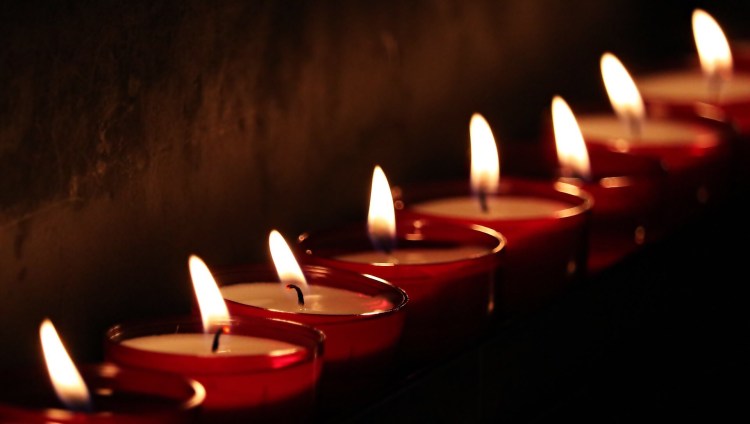
But we also have a million tiny ways of showing that we care, and today I’ve spent a lot of time thinking about all the ways the one I’m missing showed that she cared. I’ve lit candles and quietly sung songs that remind me of her. I’ve twirled her bracelet around my wrist, and I’ve consciously tried to name all the feelings that have bubbled up in my stomach, wound its way around my heart, up through my throat and that’s lingered behind my eyes. It’s been strange and a little bit scary, but it’s also brought a sense of calm.
I think I needed it.

I wasn’t prepared for today to be as heavy as it was, and I didn’t think I was going to write about it. I’m not sure what this even is, a little stream of consciousness, my mind trying to figure out what it’s feeling.
It’s been a good day, though – an important day.

I hope you all have had a good day today, too, and that you’ve had your loved ones around you.
Because those who are loved, can never be forgotten.

-Andrea

“First snow”

My garden’s been eaten by fresh bedsheets of snow,
it’s covering every inch of grass,
blanketing the city,
hushing it,
making it move a little slower than normal.
Winter tires, snow boots, layers of scarves to keep out the chill.
“It rarely snows like it used to,”
we say most winters, and we solemnly nod,
“global warming and the environment and all that.”
But for now, the sky is glittering,
with a million frozen dancers
who twirl and curtsy
like they did in the old days,
to an orchestra only they can hear.

-Andrea


Journal #12

Lazy Sunday mornings are for warm beds and woolen socks, for stretching and for relaxing. They are for opening the curtains and letting the sun in, for cracking open the window, just a little bit, to feel one of those fresh October breezes go past. They’ve got time for long breakfasts and jazz on the radio, for twirling around the kitchen while your toast is getting ready.

Sundays are for soft shirts and your hair in a bun. They are for no makeup, for being cosy in the corner of the sofa, for blankets and cushions and for scented candles. Sundays are for cups of tea. Steaming, fresh, Indian chai, blueberry muffin, cinnamon and apple, all those flavours you need to sit down and savour, that you can’t just rush in a travel mug on the way to uni. Sundays are for writing lists and plans and notes in multicolored pen, and hanging them all around your flat for yourself to find later on in the week. To do lists are always kinder when written on a Sunday.
They are also for music. For songs that make you feel like home, for songs where the bass hits your spine and makes you jump on the sofa, for songs that make you sing so loud the neighbors might come knocking.
Sundays are for catching up. All the things you couldn’t do during the weekend, Sundays are ready to pick up the slack. Sundays see buttons sown back on shirts left waiting, missed reading done and laundry finished, folded and put into neat piles. Sundays see bedsheets changed and floors hoovered and books picked up that have been discarded for too long.
Sundays have got time for walks. For dressing up warm and holding hands, for finding places you’ve never seen and exploring areas you know and love.
They are for rosy cheeks and chilly noses, and blowing on your fingers to keep them warm.

And at the end of warm Sundays you get the lazy Sunday evenings. Sunday evenings are clean sheets and fresh pajamas and curling up in bed with your favourite podcast. They are your bag ready to be packed for uni tomorrow, fairy lights taped to the wall behind your bed and lavender candles lit on the dresser. Lazy Sunday evenings are gratitude for the week that has passed and anticipation for the week to come. They are for that last cup of tea, for face masks and aloe vera moisturizer and skype calls with your sister.

Lazy Sundays evenings are a good night’s sleep, and wishing a new week welcome.

-Andrea

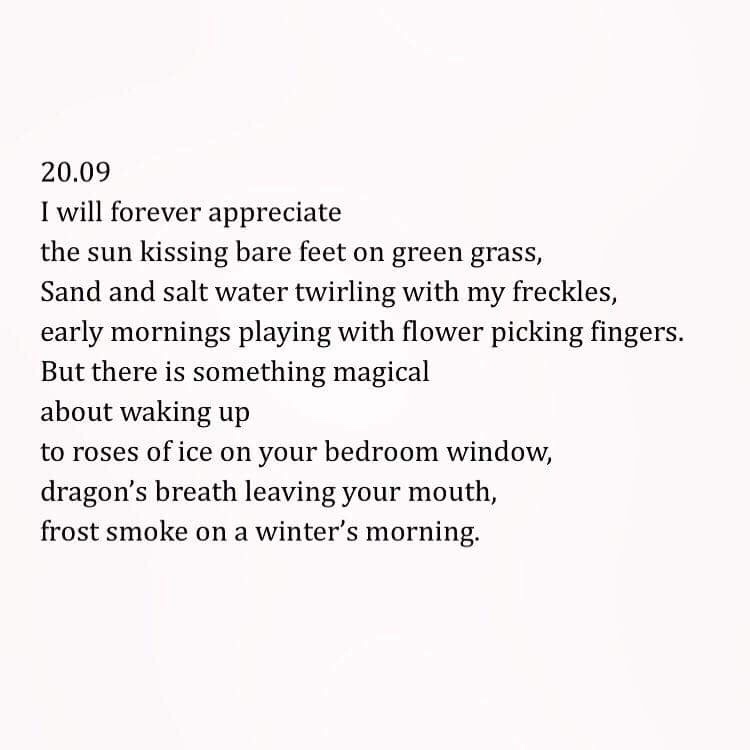
M2 Musings: Frost Smoke and Dragons’ Breath

I know it’s technically still autumn for a good two months, but it was two degrees Celsius on my way to uni this morning, so it feels more like winter than anything else and so this week’s M2 Musings’s a bit more wintery than the seasons might indicate. I like it, though! Time for huge, big scarves, thick gloves and chunky jumpers, hot chocolate, old and familiar book favourites, and curling up under the softest blankets.

If you’re new to my little M2 Musings project, you can click here to read the original post, and here to read the rest of the M2 poems, if you want to!

-Andrea

Postcrossing, or Why I Enjoy Postcards So Much

One of the things I was most excited about when I moved into this new little house of mine, was buying my first postbox. As I’ve always lived with my parents, and then moved from student accommodation to student accommodation, the postboxes have just always come with the house.
This time, however, I had to buy my own. Silly thing to be excited about, I know, but it just made me feel a little bit more adult, getting a green postbox, putting the house number on the front and my name on the inside of the lid.

So, when the postbox was installed, I was ready to start receiving some mail. However, I wanted a little bit more than just page upon page of ads, flyers and commercial catalogues, and that’s when I joined Postcrossing.

Postcrossing Main Logo

Postcrossing is a global network, a project that allows anyone to send and receive postcards from all over the world.
On their webpage, Postcrossing writes; “The idea is simple: for each postcard you send, you will receive one back from a random postcrosser from somewhere in the world. Where your postcard will come from is a surprise!”

Screen Shot 2018-09-27 at 11.39.05

(Screenshot from their “How to” page.)

Okay, so those are the basics, but let’s get on to the actual point of this post; why is this project so great?
First of all, don’t we all love to get mail? The wait and the anticipation that “Snailmail” (as it’s apparently called nowadays) brings with it, makes both the writing of your own cards and receiving cards from others a lot of fun. Also, it’s not like a pen pal arrangement, where you send letters back and forth, it’s just one card from you to another person, and then another and another, all to different people. I kind of like that, a snapshot in time and in culture.

As a former Creative Writing student, it’s so much fun to see what people choose to write on their cards; some write small poems, some tell you what they’ve been up to that day. A postcard I got last week just named the writer’s four dogs’, their breed and their age. Some have the date, weather and temperature neatly penned in the corner and some illustrate the mood of the writer, in the moment of writing.
And as a current student of International Communication, it’s also really interesting to get these glimpses into peoples’ lives, in countries that are so far from my own.
I’ve only been part of this for about a month, but I’ve both sent and received postcards from Taiwan, I’ve got one going to China now, have received multiple from the US and a couple from Russia, plus a lot of other European countries.

Screen Shot 2018-09-27 at 11.49.22

You write a little profile so that people can get an idea for something to write on the cards to you, and I’ve asked people to write “Hello” and “goodbye” in their native language, plus their favourite word. A lot of people have done so, and it’s become quite the nice little collection of greetings and lovely words that I most likely never would have learned otherwise. Also, where the language barriers get to us and we struggle with communicating, some people just draw nice little doodles or images.  It’s wonderful to open the postbox and instantly get these small glimpses of people’s lives and thoughts.

The internet and digital communication have of course made the world a lot smaller than it used to be, and talking to someone on the other side of the globe has technically never been easier or quicker. Still, though, it’s nice to connect with people through handwriting, pictures and small drawings.

As digital messages are very abstract and might feel a bit temporary, these postcards go right up on the wall above my bed when I receive them; a handfast reminder that people are people wherever you go, and we’ve all got so much more in common than we might initially believe.

Check it out if you want to! If you’d like to send more postcards and are curious to receive cards, stamps and messages from around the world, this is definitely worth having a look at.
(Also, not sure if I need to say this or not, considering my little corner of the internet over here is very small, but I’ve got no connections or anything with Postcrossing, I just really enjoy their site and the project!)

Have a wonderful day,
-Andrea

Journal #11

I woke up with the sun today, a thing that practically never happens. At 7:28am I was on the bus to town, now it’s 8:58pm and I’m on my way back. On the way home, to my little house, filled with my teacups and my pyjamas and all my books neatly shelved.

Today’s been a long day, in the best possible way. I worked with a lot of girls today, all between the age of 8 and 11, who all have the ability and the imagination to change the world. The wonder in their fingertips, and the wit in their questions, cannot be described as anything less than bravery. They were so loud. They were shouting and they laughed, they ran in circles. I wonder when we stop doing that.

I’l started reading Harvey’s almost finished novella today, too. A couple of pages in now, and I can say without a shadow of a doubt; it’s a good one. It’s got the language, the characters and the melody in the text, that’s just so intrinsically him. I’m proud of him and what he’s doing, and I hope he is too. Can’t wait to see him again.

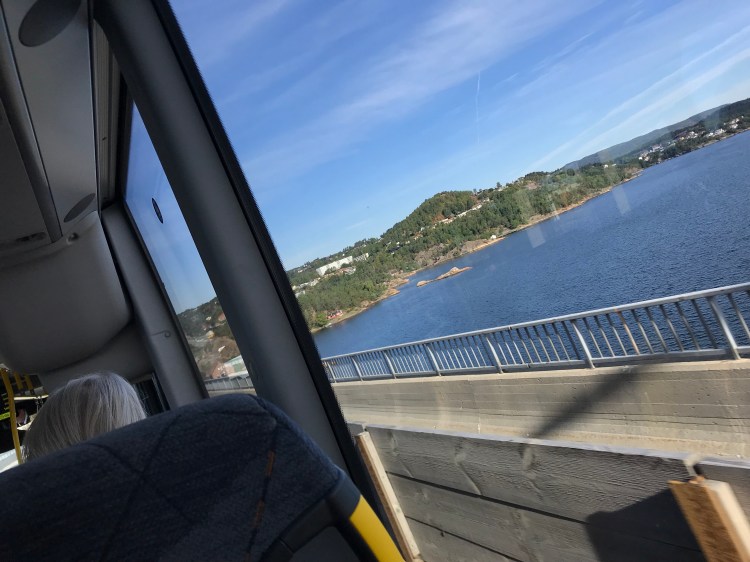
I’ve been on the bus for 6 minutes now, and we’re crossing the bridge. I don’t know when it started, but whenever we cross this one particular bridge I have to stop whatever I’m doing, I need to look up and take in the sea. Maybe it’s a homesick thing, longing for the fjord back home. Like feeling homesick, but without the sadness.

Today’s been a long day and this journal is a ramble, as you’ve already recognised. There’s been a lot of people, a lot of thoughts, a lot of ideas and a lot of impulses, and I figured a journal post could function as a place to compartmentalise it all, to work it through in my head.

Yeah, there’s been a lot of people today. First all the kids, then dinner with friends from the course, then litter picking along the beaches and some film watching with this environmental organisation in the evening. These last few weeks have been filled with a lot of people. Lucky me, though, I’ve got to meet the most wonderful people down here. Clever, intelligent, funny and caring friends, who I can’t wait to get to know even better.

I woke up with the sun today, and will go to bed long past it setting. I’m heading home to my teacups, my pyjamas, my books neatly shelved, to finish up the last piece of an assignment. First though, a cup of tea is needed; a moment to ponder over all the good things life has thrown at me lately. There has been a lot of them.

-Andrea

Wordless Books; reading the illustrations

It should come as no surprise to any reader of this blog, that I like words. I love reading, I’ve got a writing degree done and dusted, I attend poetry readings and sometimes perform my own work. I really like words, language and stories, and I talk a lot about them.

Another thing I talk a lot about, is the job I really like at the library. I love it because it lets me talk to a lot of people, I get to learn a lot of cool things, and it’s introduced me to books I never would have found on my own.

One type of book I’ve fallen completely in love with, I found when a lady came in and asked for “the book about the cats”. We should be able to find that, I said, there are lots of books written about cats, but no, she said, it’s not written. It’s just the book about the cats. I didn’t understand what she was looking for, however, the proper librarian who was also there, knew exactly what book the lady wanted.

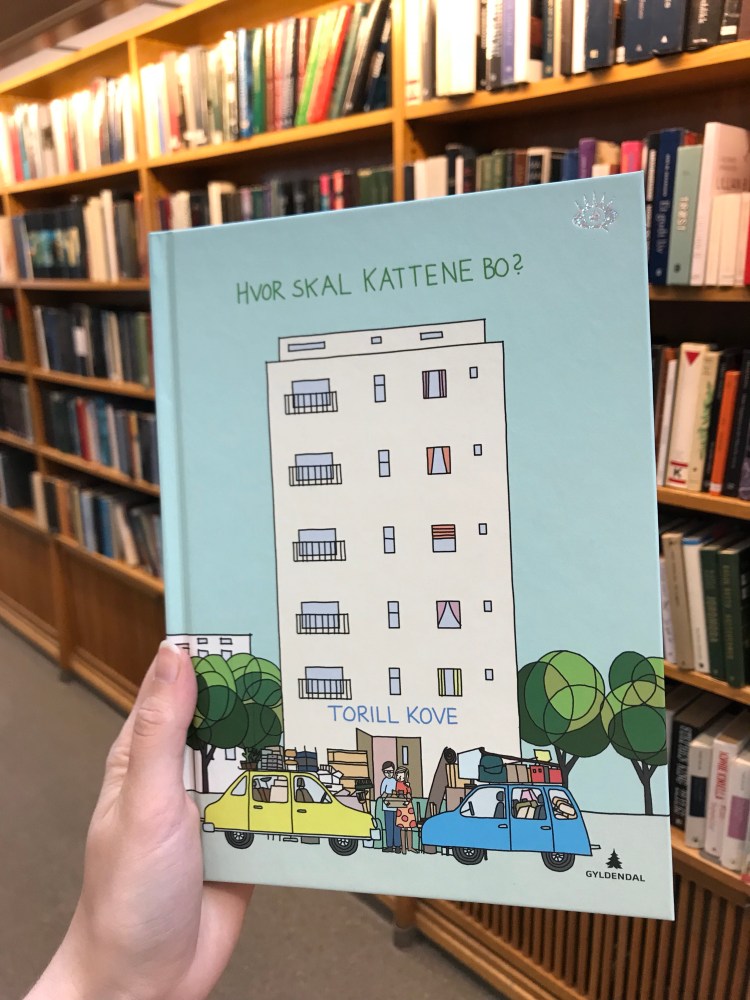
Where Shall the Cats Live by Torill Kove. Published by Gyldendal in 2018, it is classified as a “wordless book”.

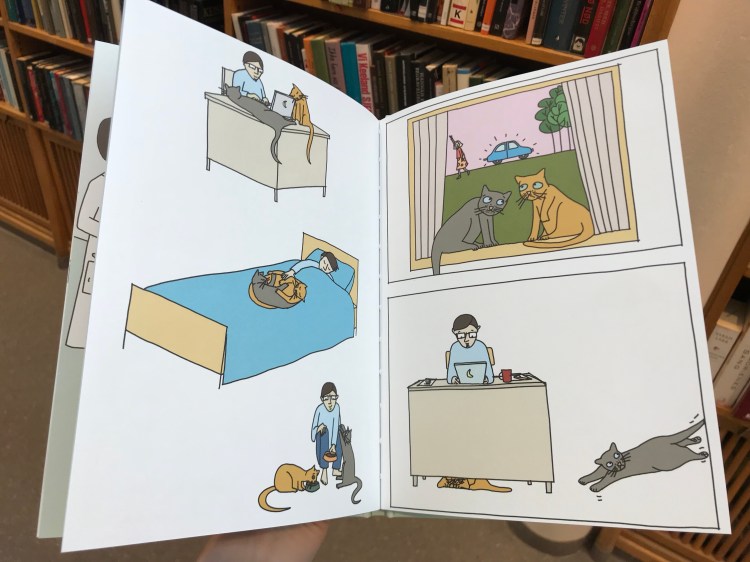
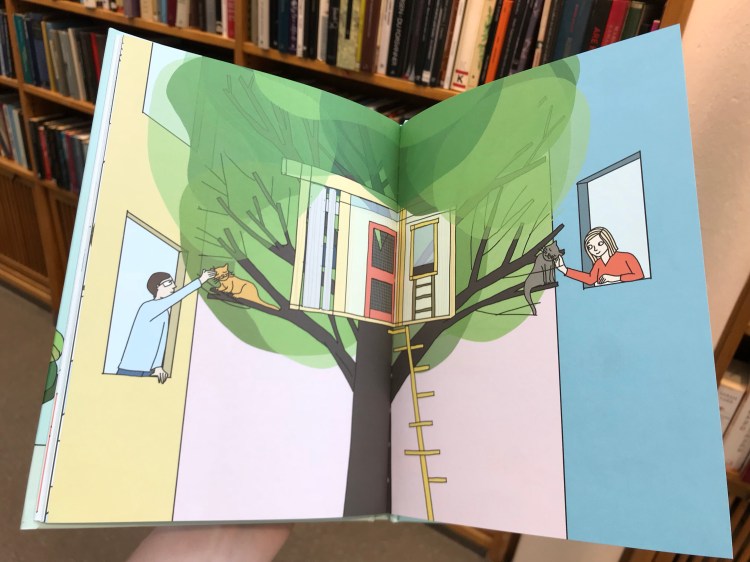
Wordless books have no words (as it says on the tin), and even though (as already mentioned) I love words, I’m so here for these books. On Gyldendal’s webpage, the publishers write that wordless books can be read both by those who love to read and those who struggle a bit more, but their purpose is to give kids who struggle with reading that feeling of having read an entire book all by themselves. This is because the wordless books aren’t read by reading the words, but by “reading the illustrations, discovering details, patterns, feelings and actions – solely by watching and understanding the visual cues; an ability our youngest readers already have.”

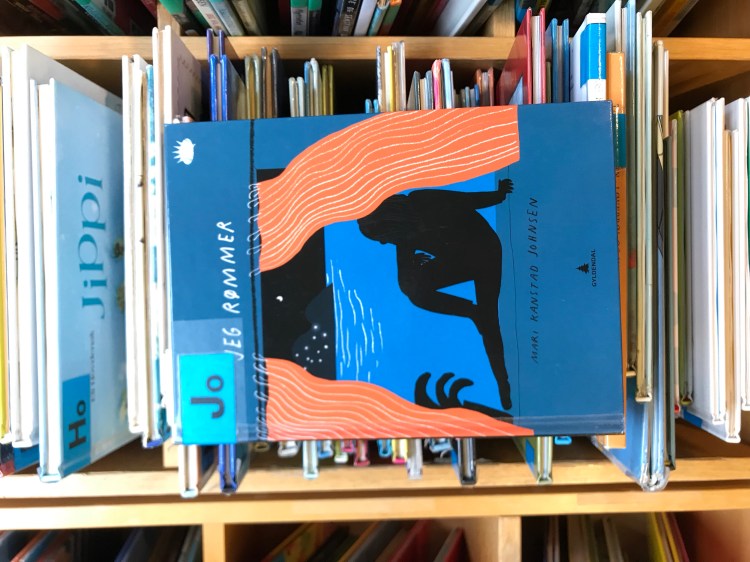
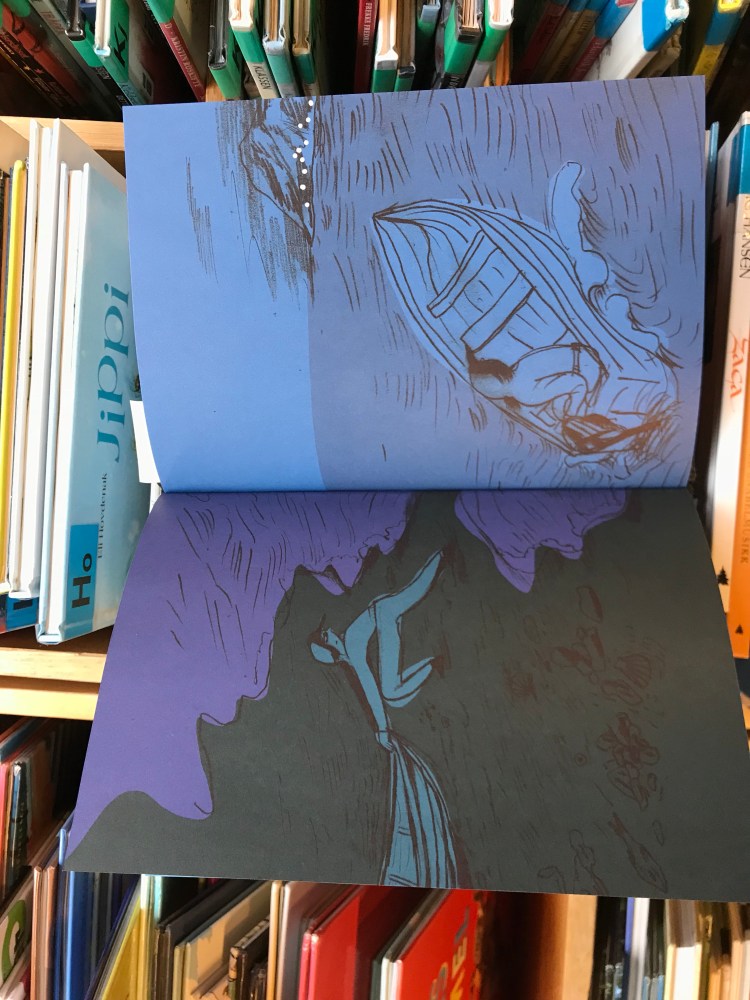
Yes, these books are absolutely wonderful for children. But the reason I fell in love with them is the wide audience they can appeal to. The illustrations in these books are colourful, vivid and vibrant, and not necessarily just for children. The book I’m running away by Mari Kanstad Johnsen, for example, is an example of a wordless book, that uses a darker style of imagery to maintain a vivid, emotional and thought-provoking nature.

In an interview with BOK365, Johnsen says that “I wanted to explore the possibilities that are hiding in a book without any text. I wanted the pictures to invite different readers to read different stories.”

This brings us back to the lady who wanted “the book about the cats”, again. She had moved to Norway from Sri Lanka a couple of years ago, and when her grandchildren came to visit, they made a game out of reading the wordless books together. How many different stories can we make out of these illustrations today? How many words can we point out in Norwegian and how many words can we name in Sinhala?
She said that sometimes she even read them on her own, just to practice using Norwegian in her head, without reading words off the page. Difficult, she said, but helpful.

To understand more about these wordless books and what they can offer, I read a study called “Using wordless books to stimulate language: Why, how and which ones?” In said study, language scientist Monica Melby-Lervåg points out that creating the stories on their own, helps build children’s understanding of narrative, which is an important part of understanding language and grammar, and also later, reading comprehension.” She also references another study, “Cognitive stimulation of pupils with Down syndrome: A study of inferential talk during book-sharing” done by Kari Anne Næss, Liv Inger Engevik and Mette Hagtvet, which states that reading wordless books is a great way to help children develop and use their vocabulary and to help them express themselves; they recognise what is happening in the illustrations and learn by putting their own words to what they’re seeing.

How wonderful is it that a little book of maybe 20 pages can be so valuable to such a wide and varied audience? This is a little niche market I had no idea existed up until a couple of months ago, and now I’m getting really into and interested in it. It is going to be interesting to see if these books manage to catch some ground in the Norwegian book market, and if there’ll be done more research on them in the future. And on the bright side, if the authors of books such as these have to branch out internationally to reach an even bigger audience, at least the translation costs won’t be breaking any banks!

What are your thoughts on wordless books? A little bit silly or really, really cool? It would be great to hear what you guys think about this!

Have a wonderful day,
-Andrea

The M2 Musings Writing Challenge

I like to call myself a writer. I navigate my way through the world in stories and make up characters to people crossing the street, but lately I haven’t been writing at all. A fairytale wedding, the voyage to a new flat past a different fjord, the adventure of getting to know a new home. These are all stories that have gone unwritten. That’s okay, though, not everything has to be documented to be valid or worthwhile.

However, I do miss writing, and I do miss the small snapshots of my everyday that writing used to be, back when I used to write down everything that came to mind, keeping every idea for a possible assignment or could-be-short story. These thoughts, plus the fact that I just stumbled over the expression “micro poetry” the other day, has resulted in this new “series” I want to try out here on the blog; the M2 Musings.

The M2 is the bus I get to the uni every day, a 12 minute ride twice a day. 12 minutes isn’t really enough time to get a book out or to get anything done, so I figured this could be some scheduled writing time.

So, here’s the plan:

Everyday (Monday to friday), I’m going to try and write something, anything, about something on or outside the bus on my way to uni, leave it while I’m in lectures, and then edit it on the bus journey back. There are no rules for what it needs to be; micro poetry, stream-of-consciousness, a few lines of a short story. All it is is a kickstart to make myself write. These bus journeys give me about 24 minutes to spend on any of the “texts”, which won’t really leave any room for overthinking, you kind of just have to go.

So, what do you guys think? Is this a project you could be interested in following? Of course I won’t post these musings daily, that would be a bit much, but maybe I’ll pick a few that ended up okay, about once a week?

Like I said, there’s been way too little writing lately, and perhaps this could be a nice incentive to get back into it, again!

Have a wonderful day,

-Andrea